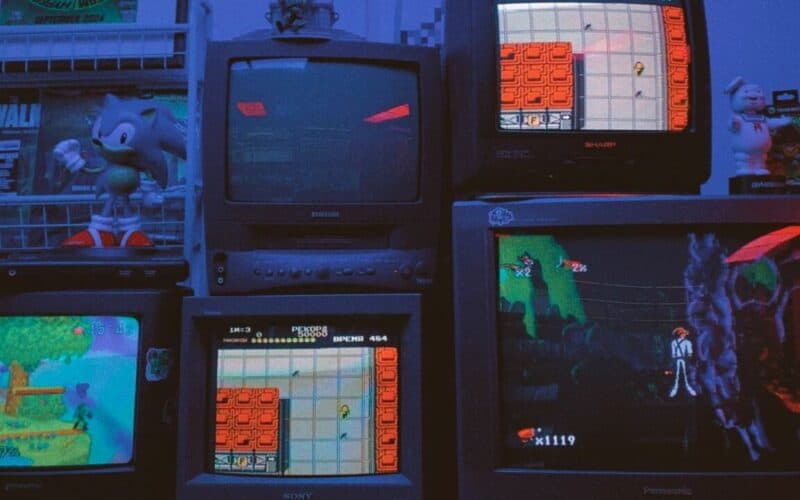
The story of retro gaming is not just a tale of technology — it is a story of human curiosity, competition, and an unrelenting desire to play. Long before the term "gaming" had entered the mainstream vocabulary, a small number of computer scientists and hobbyists were using expensive, room-sized machines to explore something entirely new: the idea that a person could interact with a computer not to calculate or compute, but simply to have fun.
It is a story that begins in the late 1950s and early 1960s, winds through coin-operated arcades, makes its way into millions of living rooms, nearly collapses under its own weight in the early 1980s, and then rises again with remarkable momentum. To understand retro gaming is to understand how an entire medium came into being — often by accident, always with passion.
The Very Beginning: Academic Experiments
Most gaming historians point to 1958 as the year the first interactive electronic game was demonstrated to the public. William Higinbotham, a physicist at Brookhaven National Laboratory, created Tennis for Two — a simple simulation of tennis displayed on an oscilloscope screen. Visitors could play against each other using aluminium controllers. It wasn't created for entertainment; Higinbotham simply wanted an engaging exhibit for the laboratory's annual open day.
A few years later, in 1962, a more influential milestone was reached at MIT. Steve Russell, a graduate student, created Spacewar! — a two-player game in which players controlled opposing spaceships and attempted to shoot each other while avoiding being sucked into a star at the centre of the screen. Unlike Tennis for Two, Spacewar! spread rapidly. Programmers copied and adapted it across university campuses throughout the 1960s, making it arguably the first truly viral game — distributed not through stores but passed person to person on magnetic tape.
These early experiments were never intended for commercial release. The computers they ran on cost millions of pounds and were accessible only to research institutions. But they planted a seed that would eventually grow into something enormous.
The Birth of the Commercial Arcade
The transformation from academic curiosity to commercial product happened gradually through the late 1960s and early 1970s. Nolan Bushnell, an engineer who had encountered Spacewar! while studying at Utah, became convinced that video games could be profitable if the hardware could be made compact and cheap enough to place in public spaces.
His first attempt, Computer Space (1971), was the first commercially produced arcade video game. It was based loosely on Spacewar! and looked extraordinary for its era — housed in a fibreglass cabinet with a futuristic design. But it failed commercially. The game was too complex for a casual audience, and Bushnell drew the correct conclusion: simpler was better.
In 1972, Bushnell co-founded Atari. The same year, he hired Allan Alcorn as an engineer and told him to create a simple table tennis game as a training exercise. That game became Pong. When Atari placed a prototype in a bar in Sunnyvale, California, the machine stopped working after just a few days — not because it was broken, but because the coin slot was overflowing with quarters. Pong became the first commercially successful arcade video game, and the industry was born.
The Arcade Boom: 1978–1982
The years between 1978 and 1982 represent what many consider the golden age of arcade gaming. The combination of increasingly powerful but affordable hardware, a booming US economy, and genuine creative ambition from game designers produced an astonishing wave of iconic titles in a remarkably short period.
Space Invaders, released by Taito in 1978, was the first game to introduce the concept of high scores displayed on the machine, encouraging players to return and compete. It was so popular in Japan that it reportedly caused a national shortage of 100-yen coins. The following year, Namco released Galaxian, improving on the Space Invaders formula with coloured graphics and more complex enemy movement.
Then, in 1980, came Pac-Man. Toru Iwatani designed the game deliberately to appeal to a wider audience, including women — who were largely absent from arcades at the time. The result was a cultural phenomenon. Pac-Man appeared on lunchboxes, T-shirts, a Saturday morning cartoon, and a Billboard-charting pop song. It became, for a time, one of the most recognisable images in the world. By 1982, the game had generated over one billion dollars in revenue from arcade machines alone.
Other landmark titles from this era include Donkey Kong (1981), which introduced the world to Jumpman — a character who would later become Mario — and Defender (1981), which pioneered the side-scrolling shooter format and introduced the concept of a mini-map. The sheer creativity and innovation of this period is genuinely remarkable, particularly given that most of these games were created by very small teams working under strict hardware constraints.
Home Consoles: Gaming Moves Into the Living Room
While arcades dominated the early 1980s, a parallel story was unfolding in people's homes. The concept of a dedicated home video game console had existed since the early 1970s — the Magnavox Odyssey, released in 1972, is generally considered the first home console. But it was Atari's home consoles that brought gaming into mainstream households.
The Atari 2600, released in 1977, was a revolutionary product. It used interchangeable cartridges, which meant that rather than buying a new machine for each game, players could simply buy new software. This model — which we still use today — transformed gaming from a fixed-function device into a platform. The 2600 sold millions of units and brought titles like Space Invaders and Pac-Man into the living room, albeit in simplified form.
Mattel's Intellivision (1979) and Coleco's ColecoVision (1982) offered more powerful alternatives, but none of them could match the cultural moment that was about to arrive from Japan.
The Crash of 1983 and the Recovery
By 1983, the North American video games market had grown to approximately $3.2 billion annually. By 1985, it had collapsed to around $100 million. The causes were complex: a market flooded with low-quality games, a lack of quality control on the Atari platform, confusion among retailers and consumers, and rising competition from home computers. The infamous ET: The Extra-Terrestrial game for the 2600 — widely cited as one of the worst video games ever made — became a symbol of the problem, though the crash had far deeper structural causes.
The recovery came from an unexpected direction. Nintendo, a Japanese playing card company that had entered the gaming market in the late 1970s, launched a home console in North America in 1985: the Nintendo Entertainment System. Nintendo had learned from the American market's mistakes. The company insisted on strict quality control through a licensing system — no game could be released for the NES without Nintendo's approval. Retailers were sceptical after the crash, so Nintendo positioned the console as a toy rather than a video game system, packaging it with R.O.B., a small robot.
The NES was a success unlike anything the industry had seen. Bundled with Super Mario Bros., it revitalised the entire North American market and established Nintendo as the dominant force in gaming for most of the following decade.
The Legacy of Retro Gaming
The games created between 1972 and the early 1990s established nearly every convention of modern video gaming. The concept of lives and game-overs. The high score table. The side-scrolling platformer. The role-playing game with levels and experience points. The fighting game. The first-person shooter. Nearly every genre we play today has its roots in this period.
Retro gaming also left something more intangible: a particular aesthetic — chunky pixels, chiptune music, simple but expressive characters — that continues to influence art, music, and design decades later. The sounds of a Commodore 64's SID chip or a Game Boy's processor are immediately recognisable to millions of people worldwide. They are, in the truest sense, the sounds of childhood for a generation that grew up in the 1980s and 1990s.
"Retro gaming isn't about nostalgia alone — it's about understanding where everything we love about games actually came from."
Today, retro gaming enjoys a passionate global community of collectors, speedrunners, historians, and casual fans who simply enjoy revisiting the games that started it all. The resurgence of interest in classic hardware, the wave of "retro-inspired" indie games, and the growing academic study of gaming history all point to the same conclusion: the golden age of classic gaming is not a relic of the past — it is a living, evolving part of our culture.
Understanding where gaming came from is the first step to appreciating where it is going. And for many of us, there is still nothing quite like the simple satisfaction of inserting a coin and watching those first pixels light up the screen.
RELATED ARTICLES